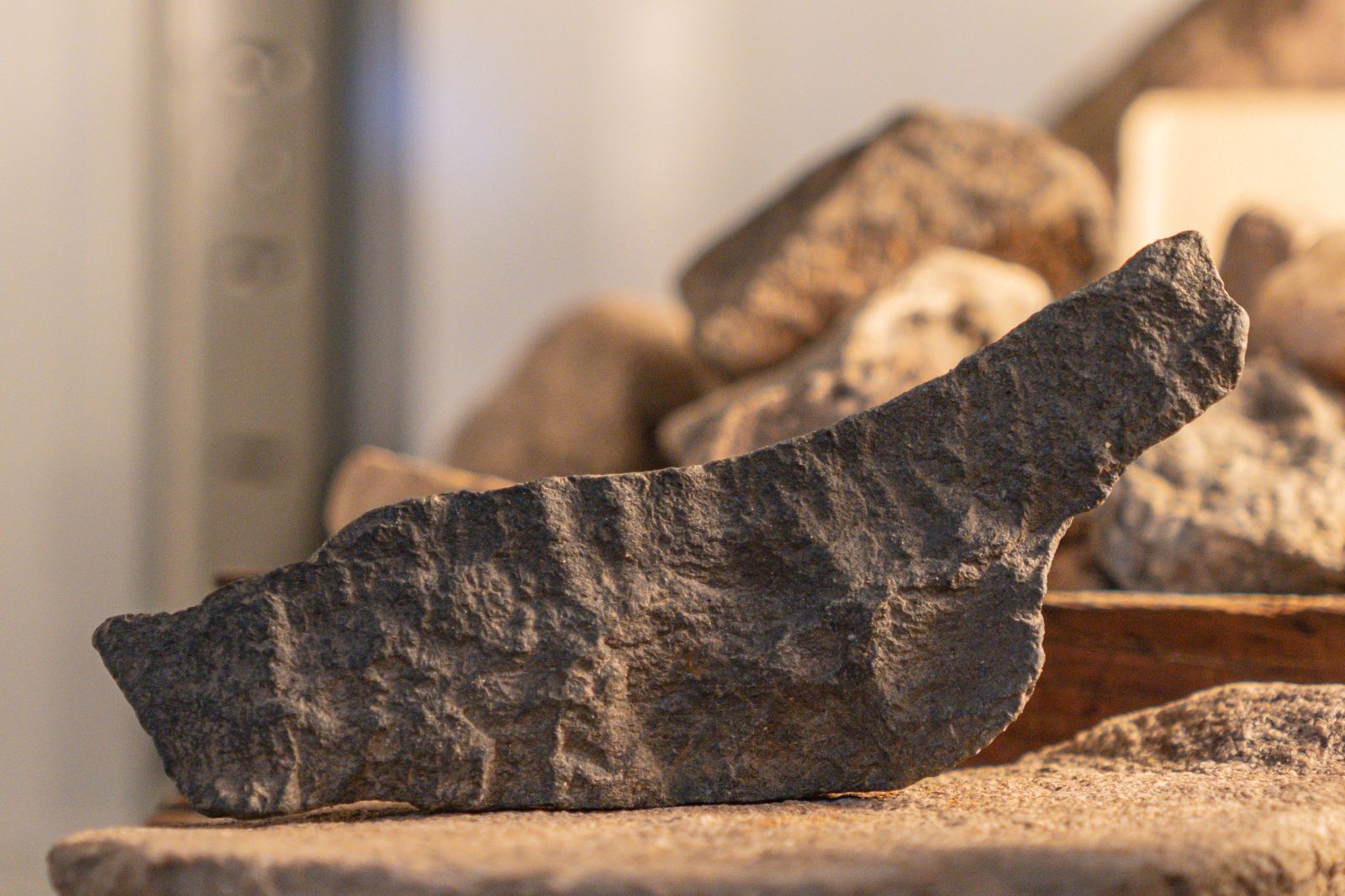
Katalogtext
Verborgenes Design: Die biomechanische Revolution germanischer „Ritualsteine“
Historischer Kontext und Entdeckung
Diese handtellergroßen, absichtlich geformten Steinobjekte stammen aus dem Kontext der germanischen Eisen- und Völkerwanderungszeit. Das hier gezeigte Ensemble wurde 1945 in der Nähe von Hamburg entdeckt und befand sich lange Zeit in einer Privatsammlung. Über ein Jahrhundert lang wurden solche Objekte von frühen Antiquaren fälschlicherweise der reduktiven Kategorie der „Ritualsteine“ oder zeremoniellen Amulette zugeordnet, da ihre glatten Oberflächen nicht den bekannten Typologien von Klingenwaffen entsprachen.
Eine moderne biomechanische und paläopathologische Analyse dieser Hamburger Sammlung hat dieses Narrativ jedoch grundlegend verändert. Was passiv auf einem Tisch liegend wie ein grobes, asymmetrisches Amulett wirkt, offenbart in der aktiven Anwendung eine erstaunlich präzise, funktionale Architektur. Die Artefakte lassen sich in zwei hochspezialisierte, biomechanische Werkzeugkategorien unterteilen.
Der anatomische Faustlader (Nahkampf-Verstärker)
- Morphologie im Wandel: Liegen diese Steine passiv auf einer Oberfläche, wirken sie ungeschickt asymmetrisch und sind von scheinbar willkürlichen Erhebungen und unregelmäßigen Rillen geprägt.
- Ergonomische Perfektion: Sobald der Stein jedoch in einer menschlichen Faust gehalten wird, löst sich diese "zufällige" Topografie sofort auf. Der Stein erweist sich als ein perfekter Negativabdruck der geballten menschlichen Hand.
- Verriegelungsmechanismus: Die zentrale Masse des Steins füllt die Handflächenhöhle perfekt aus, während sich die unregelmäßigen Rillen nahtlos an die Finger anpassen und in speziellen Vertiefungen für die Fingerspitzen enden. Dies erzeugt einen mechanisch verriegelten Griff.
- Schutz und Verstärkung: Im unbewaffneten Kampf ist die menschliche Mittelhand sehr anfällig für Trümmerbrüche. Durch die strukturelle Fixierung der Hand leitet der Stein die kinetische Energie beim Aufprall direkt in die robusten Speichen- und Ellenknochen um, was Brüche verhindert und die Schlagkraft drastisch verstärkt.
- Spezialisierte Details: Ein außergewöhnliches Exemplar der Sammlung verfügt zusätzlich über eine seitliche Ablage, die speziell für den Daumen entwickelt wurde, um eine Überstreckung bei Hochgeschwindigkeitsaufprällen zu verhindern.
Bedeutung für die Forschung
Die Identifizierung dieser Faustlader und orthopädischen Fixierungssteine erfordert eine wichtige Neubewertung der frühen nordeuropäischen Technologie. Sie beweist unmissverständlich, dass es sich bei diesen „Ritualsteinen“ in Wirklichkeit um einige der spezialisiertesten biomechanischen Werkzeuge ihrer Epoche handelt. Reduktive Pauschalklassifizierungen für diese Artefakte müssen daher künftig verworfen werden.